
From Clicks to Customers: How to Make Your Website Work Harder for Your Business
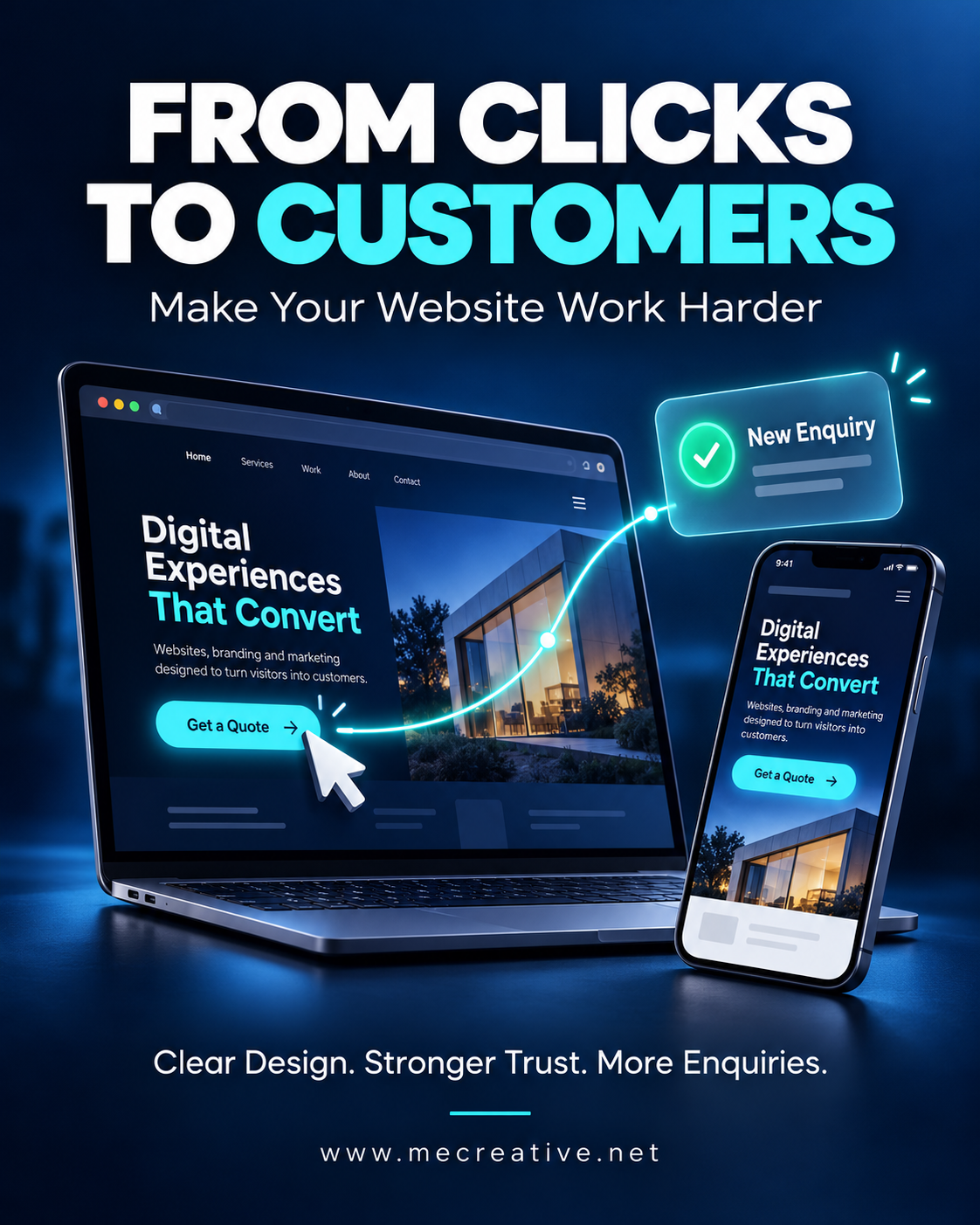
Getting people to visit your website is only the beginning. The real opportunity comes when those visitors understand your services, trust your business, and feel confident enough to contact you.
A successful website gives every visitor a clear path forward. For businesses investing in digital marketing, improving that journey can help turn existing traffic into more meaningful enquiries. Here are five areas that deserve attention.
1. Make Your Message Clear from the Start
When someone lands on your homepage, they should quickly understand what you offer, who you help, and how to take the next step. A vague headline or crowded introduction can make even a well-designed website difficult to navigate.
Use a direct headline that explains your value. Follow it with a short description of your services and a visible action, such as “Discuss Your Project” or “Request a Quote.” Keep the language focused on what your customers need and the problems you help them solve.
2. Build a Comfortable Mobile Experience
Your website should feel easy to use on a phone. Visitors should be able to read your content, explore your services, and submit an enquiry without zooming in or struggling with small buttons.
Pay attention to readable text, simple menus, well-spaced links, and short contact forms. Compress large images and review unnecessary visual effects that could slow down the experience. Before launching changes, test the pages and forms on real mobile devices.
3. Answer Questions Before Customers Ask
Useful content helps visitors decide whether your business is right for them. Service pages should explain what you provide, how the process works, and what a customer can expect.
Think about the questions your team hears regularly. How does a project begin? What information does a customer need to provide? What affects the scope or cost? Clear answers reduce uncertainty and make the first conversation more productive.
Give each core service its own focused page, supported by relevant examples and helpful FAQs. Write naturally and prioritise accuracy over repeating keywords.
4. Give Visitors Reasons to Trust You
Promises become more convincing when customers can see evidence behind them. A portfolio, a detailed project example, or a genuine testimonial can help visitors understand your capabilities.
Explain the challenge behind a project, the work completed, and the outcome when you have reliable information to share. Use client names, logos, and feedback with permission. Keep contact details accurate and make your company information easy to find.
Trust also comes from consistency. Your website, social media profiles, and marketing materials should present the same identity and message.
5. Make Enquiries Easy—and Measure Them
Choose a clear primary action for each page. A service page might encourage a quote request, while a portfolio page could invite visitors to discuss a similar project.
Ask only for the information needed to begin the conversation. Check that forms work, confirmation messages appear, and enquiries reach the right person. Track meaningful actions, such as completed forms and consultation requests, to understand which pages support your business goals.
Build a Website with a Clear Purpose
A productive website brings together clear messaging, thoughtful design, helpful content, and an easy next step. Reviewing these foundations can reveal practical opportunities to improve your customer journey.
Ready to strengthen your online presence? Visit www.mecreative.net to discuss your website and digital marketing needs with ME Creative.
Contact Us: wa.me/966500461369
#WebDesign #WebsiteOptimization #LeadGeneration #UserExperience #DigitalMarketing #ConversionOptimization #ResponsiveDesign #BusinessGrowth #MECreative

